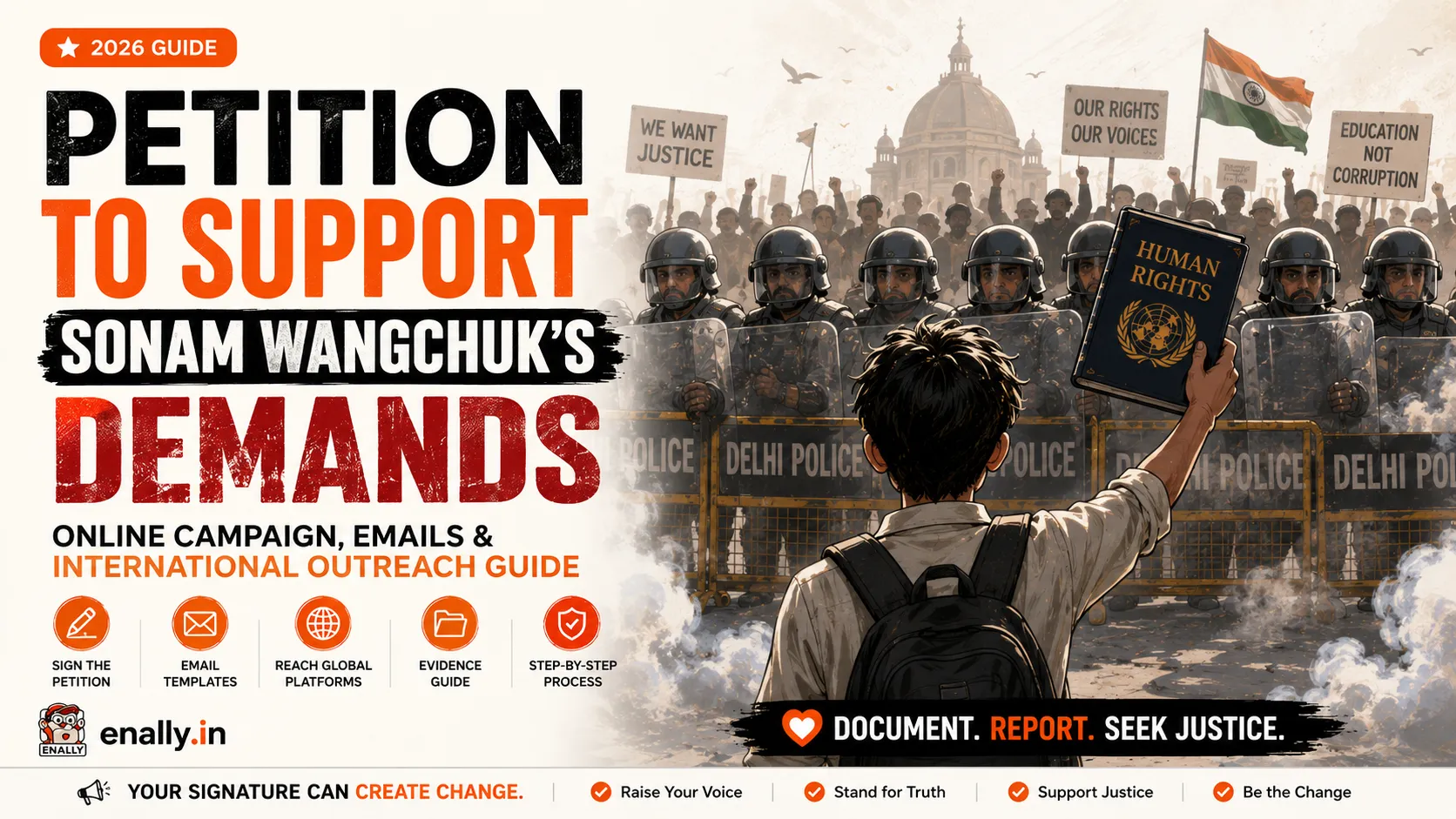






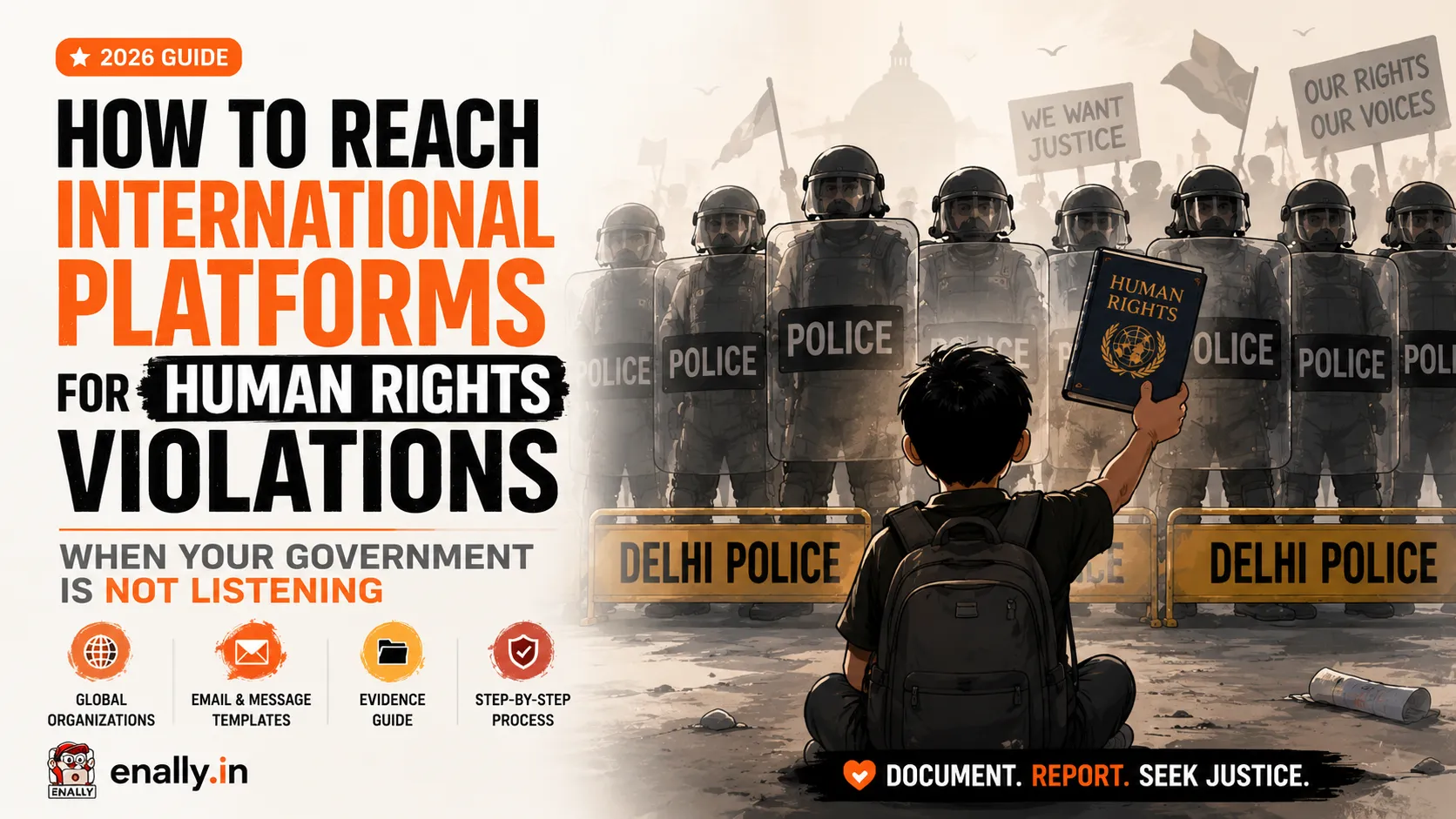
How to Report Human Rights Violations to International Organizations When Domestic Institutions Fail: A Step-by-Step Guide
When Should You Contact International Human Rights Organizations?
International organizations should not be your first option in every dispute with the government. They are generally approached when people believe that domestic mechanisms—such as police complaints, courts, commissions, media coverage, or elected representatives—have failed to address serious concerns.
You may consider contacting international organizations if:
-
Peaceful protests are met with excessive force.
-
Journalists or observers are attacked or detained.
-
Authorities refuse to register complaints or FIRs.
-
Evidence is allegedly suppressed or ignored.
-
People are detained without due process.
-
Fundamental rights such as freedom of speech, peaceful assembly, or expression are restricted.
-
There is a fear of retaliation against witnesses or victims.
International organizations cannot arrest officials, overturn government decisions, or deploy forces inside sovereign countries. Their role is usually limited to:
-
Documenting allegations.
-
Publishing reports.
-
Raising international awareness.
-
Coordinating with legal and advocacy groups.
-
Preserving evidence.
-
Requesting explanations from governments.
Step 1: Build a Human Rights Evidence Package
Most complaints fail because people send emotional messages without structured evidence.
Do not send:
-
Edited Instagram reels.
-
Cropped screenshots without context.
-
AI-generated images.
-
Forwarded WhatsApp messages.
-
Political slogans.
Instead, create a proper evidence package.
Recommended Folder Structure
Human_Rights_Case/

├── 01_Timeline/
│   └── timeline.pdf
│
├── 02_Videos/
│   ├── protest_video_01.mp4
│   ├── protest_video_02.mp4
│
├── 03_Photos/
│   ├── injury_01.jpg
│   ├── police_line.jpg
│
├── 04_Medical_Records/
│   ├── hospital_report.pdf
│
├── 05_Witness_Statements/
│   ├── witness_01.txt
│   ├── witness_02.txt
│
├── 06_News_Coverage/
│   ├── Reuters.pdf
│   ├── AP.pdf
│
└── 07_Legal_Documents/
    ├── FIR.pdf
    └── complaint.pdf
Step 2: Create an Incident Timeline
Every investigation starts with chronology.
Prepare a document like this:
| Time | Place | Event |
|---|---|---|
| 9:00 AM | Jantar Mantar | Protest begins |
| 11:30 AM | Parliament Street | Police barricades installed |
| 1:15 PM | Main road | Crowd movement restricted |
| 2:05 PM | Near Parliament | Tear gas allegedly used |
| 2:40 PM | Protest zone | Multiple injuries reported |
| 3:20 PM | Jantar Mantar | Protest dispersed |
Your timeline should include:
-
Date.
-
Exact location.
-
GPS coordinates (if available).
-
Names of witnesses.
-
Names of journalists.
-
Police station jurisdiction.
-
Estimated crowd size.
-
Number of injured people.
-
Links to evidence.
Step 3: Preserve Metadata
The strongest evidence is evidence whose authenticity can be verified.
For every video or image:
-
Keep the original file.
-
Do not edit or crop it.
-
Do not upload only Instagram versions.
-
Save the file creation date.
-
Preserve EXIF metadata.
-
Keep backup copies.
Useful metadata:
| Data | Example |
|---|---|
| Timestamp | 20 July 2026, 2:14 PM |
| GPS location | 28.6275, 77.2167 |
| Device | iPhone / Samsung |
| File size | 412 MB |
| Duration | 3 min 45 sec |
Step 4: Document Injuries Properly
If anyone was injured:
-
Take photographs immediately.
-
Record the time.
-
Visit a hospital.
-
Request written medical reports.
-
Keep prescriptions.
-
Save discharge summaries.
-
Ask witnesses to write statements.
Medical evidence is often more persuasive than social media posts.
Step 5: Create Witness Statements
Ask witnesses to write:
Name:

Age:

City:

Date of incident:

Location:

What did you personally observe?

Did you record any videos?

Were you injured?

Would you be willing to testify publicly?

Signature:
Do not exaggerate or include information the witness did not personally see.
Step 6: Zip Everything
Create a ZIP file.
Example:
July_20_Protest_Evidence.zip
Maximum recommended size:
-
Under 200 MB per email.
-
Split into multiple ZIP files if necessary.
Major International Human Rights Organizations
| Organization | |
|---|---|
| Amnesty International | contactus@amnesty.org |
| Amnesty USA | report@aiusa.org |
| OHCHR (United Nations) | hrights@ohchr.org |
| Human Rights Watch | communications@hrw.org |
| Front Line Defenders | urgent-action@frontlinedefenders.org |
| OMCT | omct@omct.org |
| FIDH | fidh@fidh.org |
| CIVICUS | info@civicus.org |
| FORUM-ASIA | info@forum-asia.org |
| NHRC India | cr.nhrc@nic.in |
International Media Contacts
If domestic media coverage is limited, international journalists may review evidence.
| Organization | Contact |
|---|---|
| Reuters Tips | tips@thomsonreuters.com |
| Associated Press | mediarelations@ap.org |
| BBC News | haveyoursay@bbc.co.uk |
| Al Jazeera | yourpics@aljazeera.net |
| The Guardian | guardian.readers@theguardian.com |
How to Structure the Email
TO
Only the primary recipient.
To:

contactus@amnesty.org
CC
Organizations you want to inform.
CC:

hrights@ohchr.org

communications@hrw.org

urgent-action@frontlinedefenders.org
BCC
People whose identities should remain private.
BCC:

yourbackup@email.com

lawyer@email.com

journalist@email.com
Never place victims' emails in CC without permission.
Best Subject Lines
Urgent: Alleged Human Rights Violations During Peaceful Protest

Request for Independent Investigation into Excessive Use of Force

Submission of Evidence Related to Freedom of Assembly Violations

Documentation of Alleged Police Misconduct and Injuries
Full Long-Form Email Template
Subject: Urgent: Alleged Human Rights Violations During Peaceful Protest

Dear Sir/Madam,

I am writing to report alleged human rights violations that occurred on [DATE] at [LOCATION].

A peaceful protest involving students and civilians was met with police action that allegedly included baton charges, tear gas deployment, and physical assaults. Multiple individuals sustained injuries.

The attached materials include:

• Original videos.

• Photographs.

• Witness statements.

• Medical records.

• News reports.

• A chronological timeline.

Participants also allege that unidentified plain-clothed individuals participated in confrontations. The identities and roles of these individuals remain disputed and require independent verification.

There are concerns regarding possible violations of:

• Freedom of peaceful assembly.

• Freedom of expression.

• Protection from excessive force.

• Access to due process.

I understand that your organization may not be able to intervene directly; however, I respectfully request that the evidence be independently reviewed and documented.

Please let me know if additional evidence or testimony is required.

Thank you for your time and attention.

Sincerely,

[Full Name]

[Country]

[Phone Number]

[Email Address]
Very Short Version
Hello,

I would like to submit evidence regarding alleged human rights violations that occurred on [DATE] at [LOCATION].

The attached files include videos, photographs, medical records, and witness statements.

I respectfully request an independent review.

Thank you.

[Name]
If You Fear Surveillance or Retaliation
Consider the following precautions:
-
Use a separate email account.
-
Enable two-factor authentication.
-
Remove metadata if revealing your identity is dangerous.
-
Store backups on multiple devices.
-
Do not publicly post sensitive witness information.
-
Encrypt archives with passwords.
-
Share passwords through a different communication channel.
Common Mistakes That Cause Complaints to Be Ignored
❌ Sending only Instagram screenshots.
❌ Sending emotional messages without evidence.
❌ Making allegations without dates or locations.
❌ Uploading edited clips.
❌ Attaching 20 GB of unorganized files.
❌ Sending threats or abusive language.
❌ Including rumors or unverified claims.
❌ Sending AI-generated images as evidence.
What International Organizations Can Actually Do
| Action | Can They Do It? |
|---|---|
| Publish reports | ✅ |
| Contact governments | ✅ |
| Review evidence | ✅ |
| Raise international awareness | ✅ |
| Recommend investigations | ✅ |
| Force government action | ❌ |
| Arrest officials | ❌ |
| Deploy investigators without permission | ❌ |
| Overturn court decisions | ❌ |
| Guarantee anonymity | ❌ |
Final Checklist Before Clicking "Send"
-
Incident timeline prepared.
-
Videos are original.
-
Photos are dated.
-
Medical records attached.
-
Witness statements collected.
-
News articles attached.
-
ZIP archive created.
-
Sensitive information reviewed.
-
Subject line added.
-
Correct recipients selected.
-
Backup saved locally.
-
Email copy sent to yourself.
YouTube Links:
https://www.youtube.com/watch?v=eGwKLOwwDKE
https://www.youtube.com/watch?v=DkxECS5CwGw
https://www.youtube.com/watch?v=_uTCnie1Ek0
https://www.youtube.com/watch?v=uYa4Z39N2nY
https://www.youtube.com/watch?v=zwO2C7iHTX0