




How to Build a Voice Agent ?
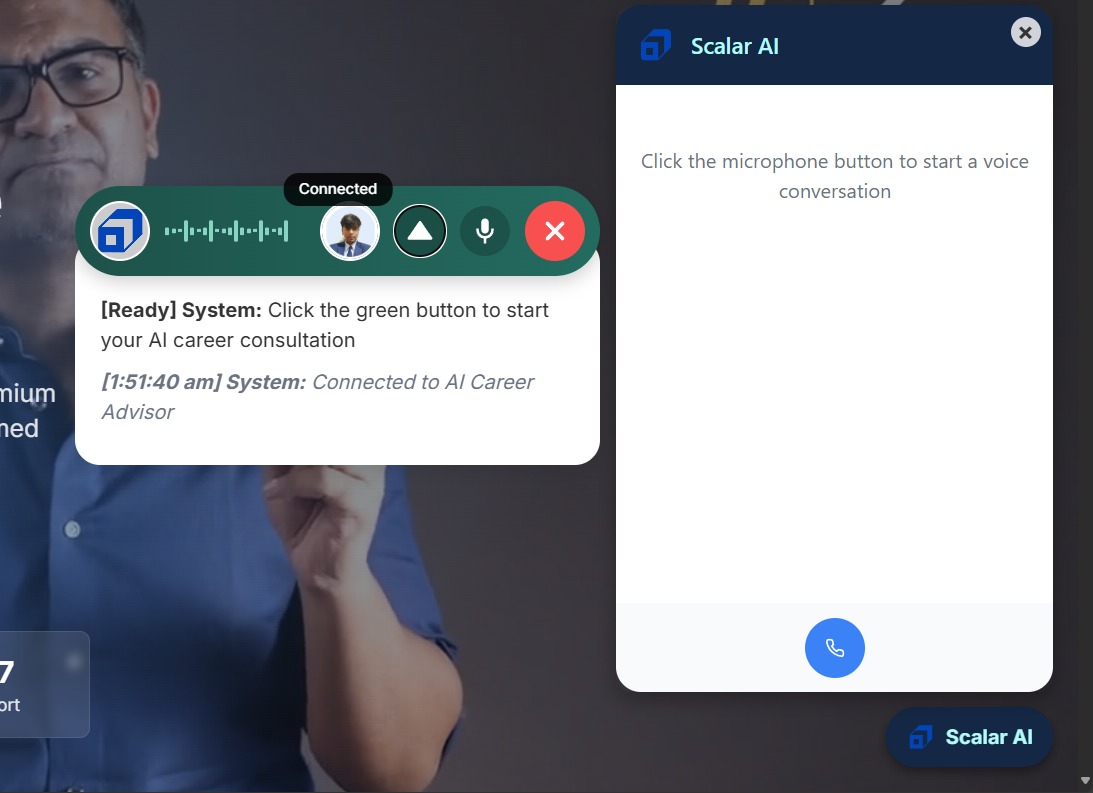
Thanks to advancements in conversational AI and natural language processing (NLP), human-computer interaction is no longer a thing of the unrealized future. Voice agents - intelligent systems which allow humans to interact with them through the spoken language - are now embedded in every day tools like Alexa, Siri or Google Assistant, they are available to anyone! More businesses and developers are starting to build their own customized voice agents for customized customer support, automating the workflow, or to create interactive applications. Within the blog, we will describe how to build a voice agent, step by step, explain the technologies, and then identify the best practices for a successful implementation.
What is a Voice Agent?
A voice agent is an AI-based system that enables users to interact with machines through natural spoken language. It uses speech recognition which converts voice to text, it uses natural language understanding (NLU), which takes the text and interprets the meaning, and it uses speech synthesis, for example, it will respond back in a human sounding voice. Voice agents can be put into websites, mobile apps, IoT devices, and enterprise systems.
Why Build a Voice Agent?
Voice agents are transforming industries because they:
-
Enhance Customer Experience: Voice is the most natural form of communication.
-
Accessibility: Allow digital services to be put in the hands of the visually impaired, or access to non-tech-savvy users.
-
Efficiency: Save time for users to look for information or complete a task.
-
Personalization: Adapt over time with user preferences. Business Value: Provide 24/7 support to customers, reduce operational cost, and improve engagement.
What are the components ?
- Automatic Speech Recognition (ASR): Changes sounding language as input into text. Common APIs: Google Speech-to-Text, Amazon Transcribe, Deepgram.
- Natural Language Understanding (NLU): Understands user intent and extracts entities. APIs: Rasa NLU, Dialogflow, Microsoft LUIS..
- Dialogue Management: Identifies how a system should respond based on context, intent and how the conversation flows..
- Text-to-Speech (TTS): Turns the response from the system back into natural sounding voice. Examples: Amazon Polly, Google Cloud TTS, Microsoft Azure TTS.
- Backend Integrations Connecting the agent to databases, CRMs or external APIs to provide real-time information.
Steps to Build a Voice Agent
1. Define the Use Case
-
Identify the problem your voice agent will solve (e.g., customer support, booking system, personal assistant).
-
Define the scope: Will it handle FAQs, transactional tasks, or complex multi-turn conversations?
2. Choose the Technology Stack
-
ASR: Google Speech-to-Text, OpenAI Whisper.
-
NLU: Dialogflow, Rasa, spaCy, or Hugging Face models.
-
TTS: Amazon Polly, Google TTS, ElevenLabs.
-
Hosting & Infrastructure: Cloud providers like AWS, GCP, Azure.
3. Design the Conversation Flow
-
Map intents and possible user journeys.
-
Plan for errors and fallback scenarios.
-
Use flowcharts or conversation design tools (Voiceflow, Botmock).
4. Develop & Integrate
-
Train NLU models on domain-specific datasets.
-
Implement ASR → NLU → Dialogue Manager → TTS pipeline.
-
Connect to backend systems for real-world functionality (e.g., fetching account details).
5. Test & Iterate
-
Use test scripts to check recognition accuracy and conversation handling.
-
Collect user feedback and fine-tune.
-
Optimize for accents, noise, and multilingual support.
6. Deploy & Monitor
-
Deploy on web, mobile, or IoT devices.
-
Monitor logs, error rates, and user satisfaction.
-
Continuously update with new intents and FAQs.
Best Practices
-
Keep responses short and natural. Long replies overwhelm users.
-
Handle interruptions gracefully. Voice conversations often involve barge-ins.
-
Support multiple languages and accents. Expands usability.
-
Ensure data privacy. Encrypt conversations and comply with regulations like GDPR.
-
Leverage analytics. Track usage patterns to improve agent performance.
Future of Voice Agents
Voice agents are rapidly evolving with advancements in Generative AI and large language models (LLMs). Future agents will:
-
Exhibit more human-like empathy and reasoning.
-
Support multimodal interaction (voice + text + visuals).
-
Learn continuously from user interactions.
-
Enable hyper-personalized experiences in healthcare, education, and e-commerce.
Takeaways
Creating a voice agent requires leading-edge AI technologies, conversation design, and a current improvement plan. Whether you are a startup delivering smart assistants or an enterprise automating customer support, voice agents are the next level of human-computer interaction. With the right tools and best practices, you can build an effective, usable, scalable voice solution for users to enjoy and convert value to your business.
At Enally, we are passionate about making technology accessible and practical. Stay tuned for more deep dives into emerging technologies, AI, and real-world applications.